By May 31, 2026, support for QuickBooks Desktop 2023 ends entirely. No payroll updates. No bank feeds. No security patches. If you’re still on QuickBooks Desktop, you’re not alone but the clock is ticking faster than any of us want to admit.
But here’s the good news: You don’t have to panic. And you don’t have to settle for QuickBooks Online just because Intuit wants you to.
So, let’s cut through the noise. Here’s my honest, industry-by-industry guide to the best alternatives to QuickBooks Desktop – so you can make the switch with confidence before the deadline arrives.
Top Pick for Field Service Management: Aptora 360
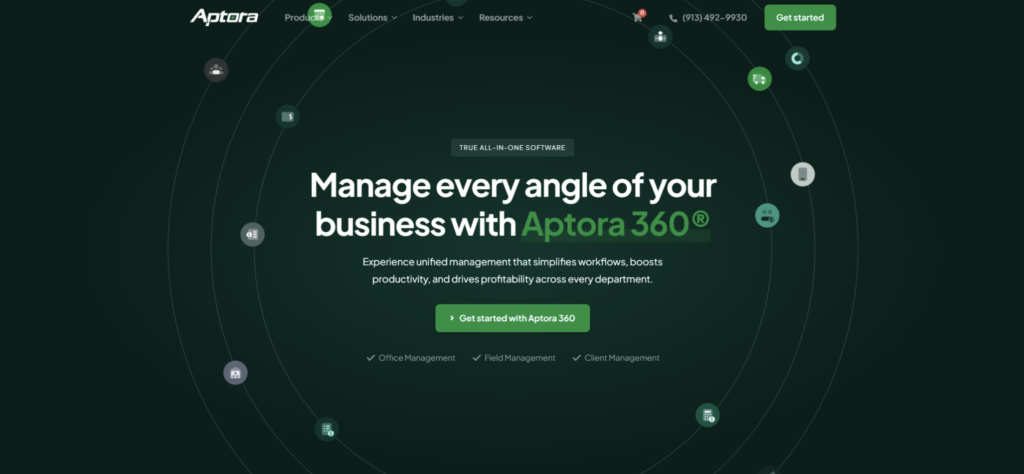
Aptora 360 is the field service solution I recommend most to my service business clients. Designed by industry expert James Leichter, Aptora’s accounting software completely replaces QuickBooks Desktop while letting you keep all your historical financial data. Your data stays in a Microsoft SQL Server database that you control.
But here’s what actually matters: It handles service agreements, inventory management, real-time field activity tracking, and technician dispatch in one integrated system. You stop juggling three different apps to run your business.
Other solid options to consider:
- ServiceTitan – Cloud-based, excellent for larger field service operations that can afford enterprise pricing
- Jobber – Great for smaller service teams; it handles field operations while integrating with QuickBooks or other accounting tools
- Service Fusion – All-in-one cloud-based option that works well for growing service businesses
Verdict: Total Office Manager is the smart choice for serious field service companies that want to own their data and stop fighting their software.
Top Pick for Construction and Contracting: Premier Construction Software
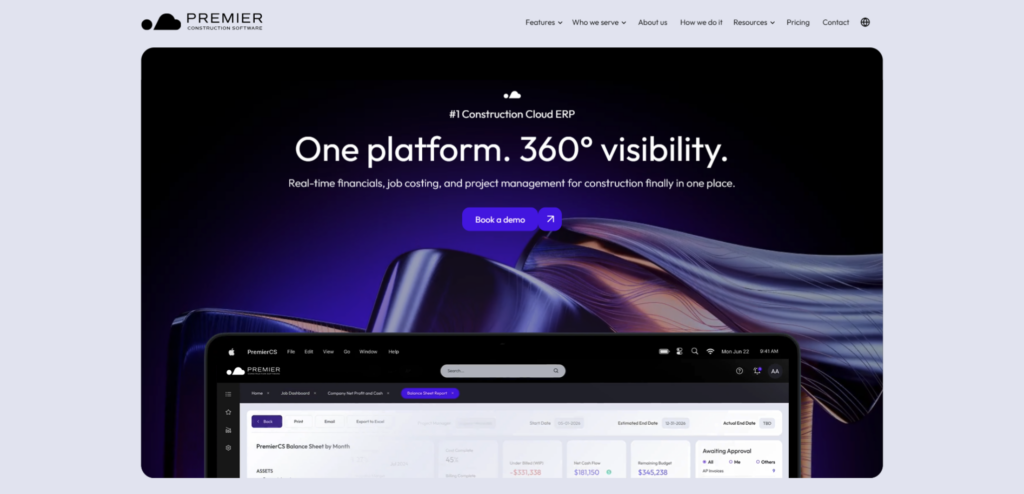
If your construction business has revenue between $5 million and $500 million, Premier is purpose-built for you. Growing contractors typically outgrow QuickBooks by about $5 million in revenue, and Premier handles job costing, project management, field tools, and subcontractor management in a single system.
Unlike QuickBooks, Premier gives you native WIP reporting (which is required for bonding and lender compliance), percentage-of-completion revenue recognition, and real-time cost tracking that QuickBooks simply cannot provide.
Other excellent construction options:
- Sage 100 Contractor – Great for smaller contractors, especially in residential construction
- CMiC – Best for larger construction firms that need comprehensive ERP functionality
- Viewpoint Spectrum – Strong choice for mid-sized to large construction companies
- ComputerEase – Well-regarded in specialty trades like electrical and mechanical
Verdict: Stop trying to force a general-purpose accounting tool to function like construction software. Premier is the real answer if you’re serious about margins.
Top Pick for Retail: NetSuite
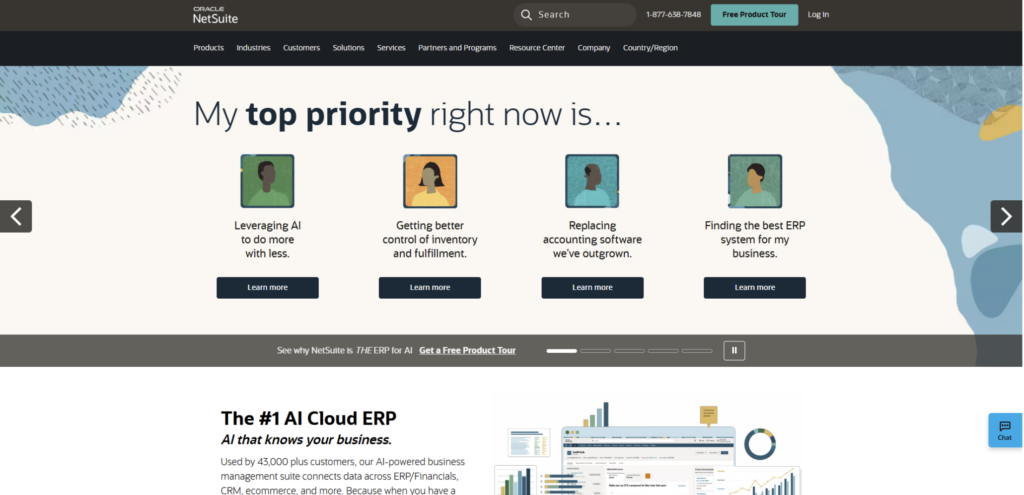
I realize mentioning NetSuite might make some small business owners’ eyes glaze over. But here’s the reality: NetSuite is the most comprehensive cloud ERP for growing retailers, unifying financials, inventory, CRM, and e-commerce in one system. If you’re a product-based business pushing $5 million or more in annual revenue, you should be seriously evaluating NetSuite.
NetSuite offers advanced inventory management, supply chain management, and detailed financial controls that QuickBooks simply cannot match. The migration isn’t trivial – working with migration specialists is highly recommended – but for retailers ready to scale, NetSuite is worth the investment.
Other solid retail options:
- QuickBooks Online Advanced – Works well for growing single-entity retailers; offers solid automation and app integrations
- OneUp – Budget-friendly option starting at $9/month with point-of-sale integration and e-commerce sync
- Odoo POS – Excellent open-source alternative for retailers who want maximum flexibility and control
- Sage Business Cloud – Good choice for retailers needing enterprise-level features at a more accessible price
Verdict: If you sell physical products, don’t settle for accounting software that treats inventory as an afterthought. NetSuite is your best bet for serious retail operations.
Top Pick for Nonprofits and Charities: Aplos
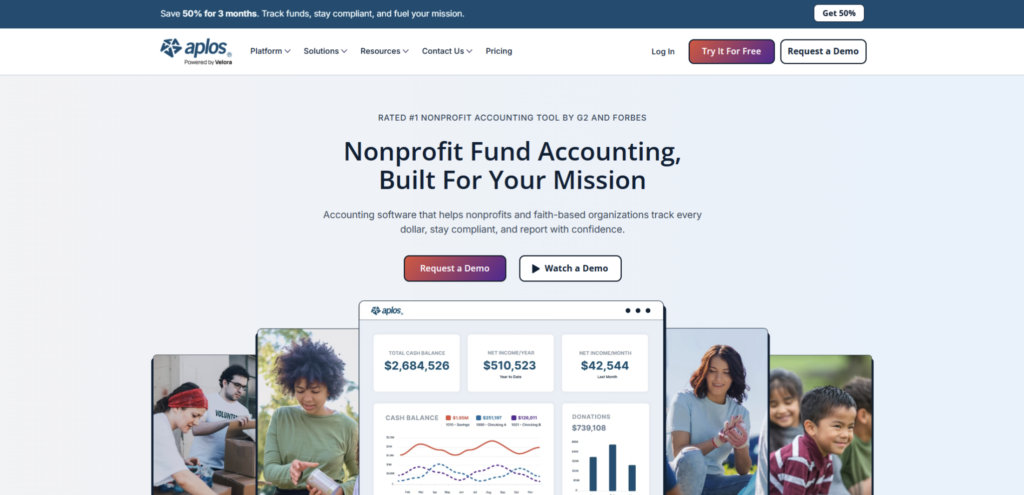
Aplos is purpose-built for nonprofit fund accounting. It handles donor management, grant tracking, fund restrictions, and the specialized reporting that donors and boards expect. Unlike general-purpose accounting tools that force you into awkward workarounds, Aplos was designed from the ground up for nonprofits.
Other excellent nonprofit options:
- Fund EZ – Strong choice for mid-sized nonprofits that need robust fund accounting features
- Sage Intacct – Best for larger nonprofits with complex grant management and multi-entity structures
- Blackbaud Financial Edge NXT – The enterprise standard for large nonprofits with sophisticated needs
- FastFund – Good for smaller nonprofits that want nonprofit-specific features without enterprise complexity
Verdict: Don’t force a business accounting tool to do fund accounting. Aplos gives you the nonprofit features you actually need.
Top Pick for Freelancers and Solopreneurs: FreshBooks
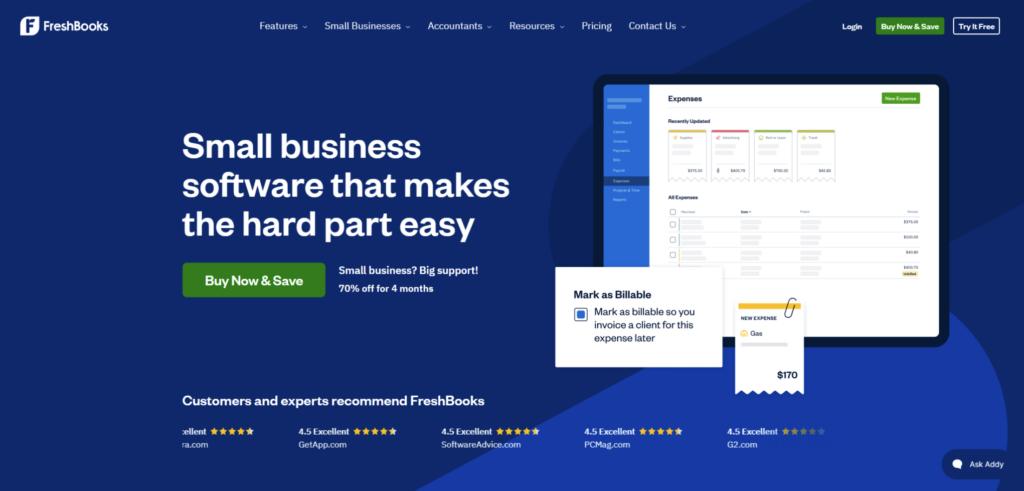
FreshBooks is the platform I recommend most to my freelance clients. Starting at about $21 per month, it offers beautiful, customizable invoicing, automatic expense tracking via OCR technology that reads receipt data, built-in time tracking, and a user-friendly dashboard that won’t overwhelm you.
FreshBooks was purpose-built for freelancers and service businesses. It strips away all the accounting complexity you don’t need and gives you exactly what you do need to get paid faster.
Other excellent freelance options:
- Wave – Completely free core accounting (invoicing, expense tracking, receipt scanning) for truly budget-conscious solopreneurs
- Xero’s Starter plan – Good option if you anticipate growth and want a platform that can scale with you
- Zoho Books – Free starter plan for one user; excellent if you already use other Zoho products
- Quicken Business & Personal – Best overall for self-employed professionals who also want personal finance management in one subscription
Verdict: Stop paying for features you don’t use. FreshBooks gives freelancers exactly what they need.
Top Pick for Manufacturing and Product-Based SMBs: Sage Intacct
Sage Intacct is the best QuickBooks alternative for manufacturing and product-based companies that need advanced inventory management and multi-entity financials. It offers deep inventory tracking, revenue management, and financial consolidation features that QuickBooks simply can’t match. Sage Intacct is also widely considered the best option for enterprise and multi-entity organizations that need sophisticated financial controls.
Other excellent manufacturing options:
- Katana Cloud Manufacturing – Excellent for smaller manufacturers who need real-time inventory and production tracking
- NetSuite – The gold standard for product-based businesses that need full ERP functionality, including manufacturing, CRM, and e-commerce in one unified system
- QuickBooks Enterprise – Actually viable for smaller manufacturers with simpler inventory needs who still want to stay in the Intuit ecosystem
Verdict: If you’re building actual products, Sage Intacct gives you manufacturing-grade inventory management without the full cost of enterprise ERP.
Top Pick for Professional Services (Agencies, Law Firms, Consultants): Xero
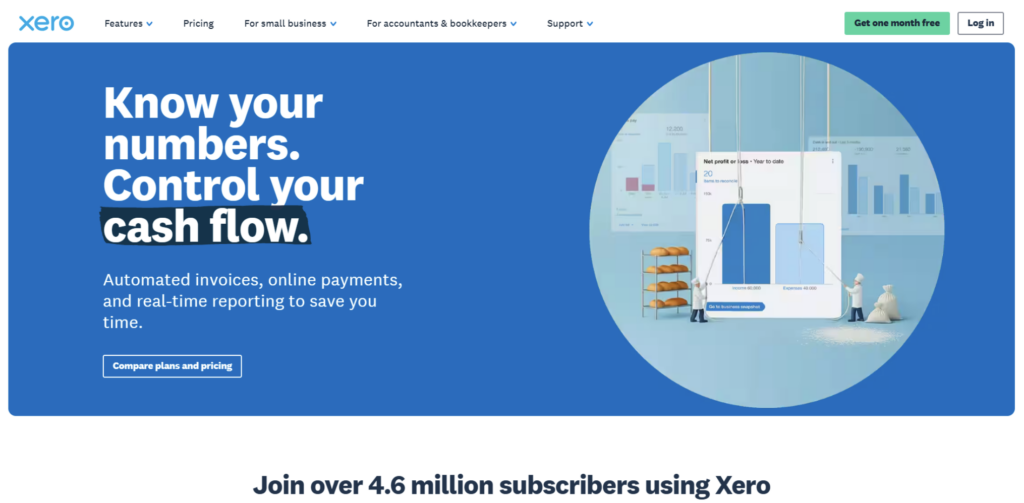
Xero is my top recommendation for most professional services businesses. It offers strong project tracking capabilities that let you oversee projects from draft to completion, seamless integration with over 800 third-party apps, and – here’s the kicker – unlimited users on every pricing plan.
For professional services teams that collaborate on client work, unlimited users is a game-changer. You don’t pay per seat. Everyone who needs access gets access. Xero also gives you up to 180-day cash flow forecasting, customizable invoices, and a clean, modern interface that your team will actually enjoy using.
Other excellent professional services options:
- FreshBooks – Perfect for smaller service firms (under 10 people) that live in invoicing and time tracking
- Zoho Books – Strong choice if your firm already uses the Zoho ecosystem for CRM and project management
- QuickBooks Online Advanced – Familiar option for service firms that want to stay in the QuickBooks family but move to the cloud
Verdict: For service businesses that need team collaboration without per-user pricing, Xero is the smartest alternative out there.
Your Next Steps
Before you choose any alternative to QuickBooks Desktop, here are my three non-negotiable recommendations:
1. Verify your support cut-off date. QuickBooks Desktop 2023 loses all support on May 31, 2026. 2024 versions stay supported until September 30, 2027. If you’re on 2023 or earlier, you need to move now – not “soon.”
2. Do not skip data cleanup before migrating. The most common problem I see? Clean data going in equals clean reports coming out. Messy data going in? You’ll spend weeks unfixing what could have been fixed before the move.
3. Choose based on your industry, not the brand name. The best accounting software isn’t the most popular. It’s the one that matches how your business actually works. A field service company needs Total Office Manager. A construction contractor needs Premier. A freelancer needs FreshBooks. Don’t let brand loyalty keep you stuck in a tool that’s fighting you every day.
The QuickBooks Desktop phase-out isn’t a crisis. It’s an opportunity. It’s your chance to finally move to software that fits your industry, your workflow, and your business – not just what you settled for years ago.
Take a deep breath. Pick the category that matches your business. And make the switch before your bank feeds go dark.