SMD diode bridge rectifiers are among the most quietly essential components in modern electronics. From smartphone chargers and laptop power supplies to industrial control boards, these compact devices handle the fundamental task of converting alternating current into the direct current that circuits depend on. When one fails, the entire device goes down — and for repair technicians, every minute spent hunting for the right replacement part translates directly into lost revenue and frustrated customers.
Sourcing these components presents a real challenge. The sheer variety of package sizes, voltage ratings, and current capacities means that grabbing the wrong part is easier than it sounds. Add in inconsistent supplier stock, counterfeit components flooding certain markets, and the pressure to turn repairs around quickly, and procurement becomes a genuine bottleneck in the repair workflow.
This guide cuts through that complexity. Whether you’re an independent repair technician or managing a small electronics service shop, you’ll find actionable strategies for identifying the correct SMD diode bridge rectifier for any job, locating reliable electronic spare parts efficiently, and building a sourcing process that keeps your bench running without unnecessary delays.
What is an SMD Diode Bridge Rectifier? Core Functions Explained
An SMD (Surface Mount Device) diode bridge rectifier is a compact electronic component that converts alternating current (AC) into direct current (DC) — the same fundamental job as its through-hole counterpart, but packaged for modern, space-efficient circuit board designs. Where through-hole rectifiers require leads inserted through drilled holes and soldered on the underside of a board, SMD rectifiers sit directly on the surface, taking up significantly less space and enabling the miniaturized designs found in today’s electronics.
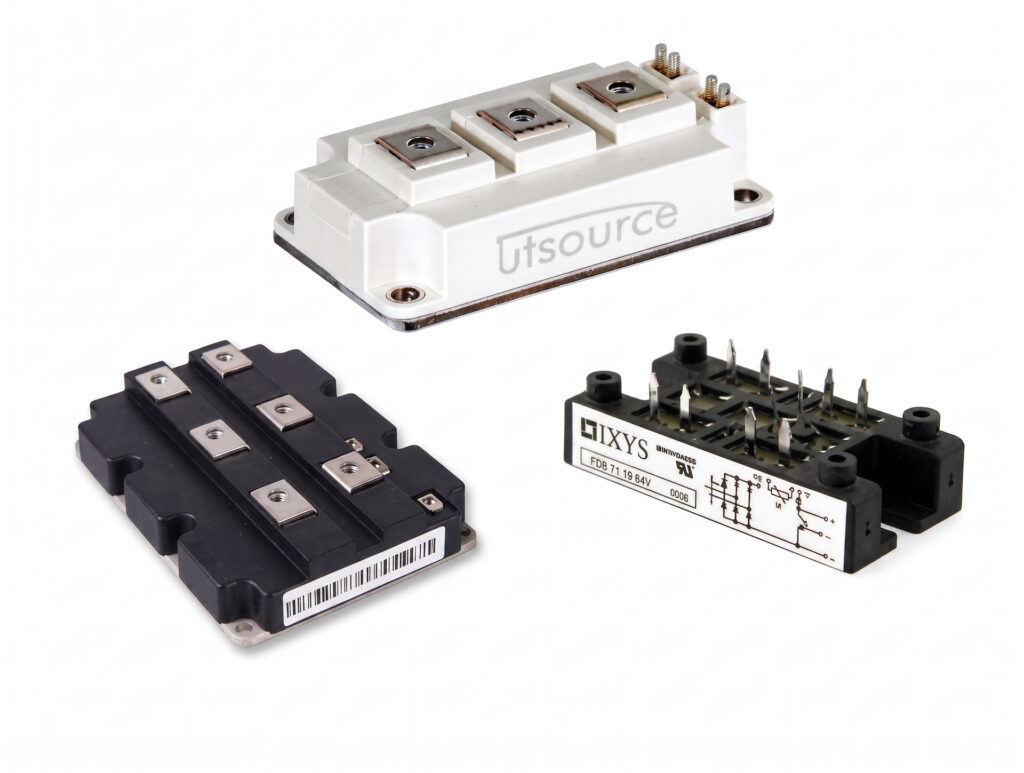
At its core, a diode bridge rectifier consists of four diodes arranged in a bridge configuration. During the positive half of an AC cycle, two diodes conduct; during the negative half, the other two take over. The result is a pulsating DC output that downstream filtering components then smooth into stable, usable power. This full-wave rectification is far more efficient than single-diode half-wave approaches, which is why bridge rectifiers for electronics appear so consistently across product categories.
Repair technicians encounter these components constantly. Laptop and phone chargers, LED driver boards, HVAC control units, appliance power supplies, and automotive electronics all rely on SMD bridge rectifiers to deliver clean DC power to sensitive circuits. Common package formats include SOP, SOD, and various proprietary surface-mount housings, each suited to different current and thermal requirements. Recognizing these packages on sight — and understanding what they do — is the first step toward sourcing the right replacement quickly.
The Importance of Quality Rectifiers in Electronic Repairs
A rectifier failure rarely announces itself gently. More often, it takes other components down with it — capacitors, MOSFETs, control ICs — turning what should be a straightforward swap into a costly, time-consuming board-level diagnosis. This is why the quality of the replacement rectifier matters far beyond the component itself. Installing a substandard part might get a device running temporarily, but thermal runaway, voltage spikes from insufficient peak inverse voltage ratings, or early diode degradation will bring it back to the bench within weeks. That’s a warranty callback, a damaged reputation, and a customer who won’t return.
Reliable electronic repair components deliver consistent forward voltage drop, stable reverse leakage current, and thermal performance that matches the original design intent. Cheap counterfeits, often indistinguishable by appearance alone, frequently use inferior silicon that fails under load conditions the original part handled without issue. The savings on a batch of cut-price rectifiers evaporates quickly when rework labor and replacement parts are factored in.
For repair technicians, sourcing from trusted suppliers isn’t just a best practice — it’s a business decision. Reputable distributors provide traceability, manufacturer documentation, and consistent quality control that grey-market sources simply cannot guarantee. When a customer hands over a high-value device, the rectifier on your bench should be one thing you never have to second-guess.
How to Identify the Right SMD Rectifier for Your Repair Job
Getting the replacement right the first time starts with reading what the failed component actually tells you. Most SMD bridge rectifiers carry a date code, manufacturer prefix, and abbreviated part number printed directly on the package. Cross-referencing that marking against manufacturer databases or sites like Octopart will pull up the full datasheet, giving you the complete electrical profile of the original part. When markings are burned or illegible, the board schematic — if available through service manuals or community repair databases — is your next best resource. For devices without published schematics, measuring the surrounding circuit’s supply voltage and estimating load current from connected components can help you back-calculate the minimum specifications needed.
Three parameters matter most when matching a replacement. Peak inverse voltage (PIV) must meet or exceed the original rating — installing a rectifier with insufficient PIV in a high-voltage application guarantees premature failure. Average forward current capacity should match the load demand, with some headroom for startup surges. Package size is equally non-negotiable; a component that won’t fit the pads correctly creates soldering problems and potential reliability issues regardless of its electrical specs.
Decoding Datasheets and Technical Specifications
When you pull up a datasheet, focus on four values before anything else: peak inverse voltage (VRRM), average rectified forward current (IF(AV)), forward voltage drop (VF), and maximum junction temperature (TJ). The PIV rating tells you how much reverse voltage the diodes can block without breaking down — always select a replacement with a PIV at least equal to the original, and consider stepping up one rating tier for devices in high-stress environments. Forward current capacity determines whether the rectifier can sustain the load without overheating. A lower-rated substitute will run hot, degrade faster, and eventually fail under conditions the original handled comfortably.
Forward voltage drop affects efficiency and heat generation, so staying close to the original value prevents unexpected thermal behavior in the repaired device. To cross-reference a failed component, note the original part number, locate its datasheet, record all critical values, then search distributor parametric filters using those exact figures. This method surfaces direct replacements and compatible alternatives simultaneously, reducing the risk of selecting a part that looks right on paper but behaves differently under real operating conditions.
A Practical Guide to Sourcing and Ordering Rectifiers Efficiently
Efficient sourcing begins before you ever open a browser tab. Start by extracting the full part number from the failed component or its schematic reference, then identify the manufacturer. Even a partial marking gives you enough to run a search on parametric databases. Once you have confirmed specifications, you can search by exact part number for a direct replacement or use distributor filter tools to find functional equivalents — components from different manufacturers that meet the same electrical and physical requirements. This two-track approach prevents dead ends when the original part is discontinued or out of stock.
For rare or legacy components, community resources fill gaps that mainstream distributors cannot. Forums like EEVblog, Reddit’s r/AskElectronics, and specialized repair communities often surface obscure part sources that never appear in standard searches. Cross-reference tools such as Octopart aggregate inventory across dozens of distributors simultaneously, letting you compare availability and pricing in a single view rather than checking each supplier individually. When a direct replacement genuinely doesn’t exist, selecting a compatible alternative using the datasheet parameters covered earlier is the correct fallback — not guessing based on physical appearance alone.
Speed matters in a repair workflow, so supplier selection should account for more than price. Shipping time, minimum order quantities, and return policies all affect how quickly a part reaches your bench and what happens if a batch arrives defective. For high-turnover components, establishing accounts with two or three reliable distributors gives you redundancy when one runs short. Always verify stock levels before finalizing an order — listed inventory isn’t always accurate in real time, and a confirmed order that later ships incomplete wastes days you can’t recover.
Top Online Platforms for Electronic Spare Parts
Digi-Key and Mouser Electronics are the default starting points for most repair technicians, and for good reason. Both carry extensive inventories of SMD bridge rectifiers from major manufacturers including Vishay, ON Semiconductor, and Diodes Incorporated, with detailed parametric search tools that let you filter by PIV, forward current, package type, and operating temperature simultaneously. Shipping is fast, documentation is thorough, and counterfeit risk is minimal given their direct manufacturer relationships. The trade-off is pricing — neither platform is optimized for small-quantity bargain buying, and minimum order thresholds can push costs up for single-unit repairs. Arrow Electronics and Future Electronics offer similar quality with occasionally better pricing on specific product lines, making them worth checking when Digi-Key and Mouser come up short. For technicians sourcing higher volumes or working with Asian-manufactured boards, LCSC Electronics provides broad inventory at competitive prices with reasonable international shipping, though lead times require planning ahead. UTSOURCE is another option worth bookmarking, particularly when hunting down hard-to-find or legacy SMD components that have cycled out of mainstream distributor stock.
Step-by-Step Process to Order Rectifiers for Quick Repairs
Begin with the confirmed part number or specification list and open your primary distributor’s parametric search. Enter the PIV rating, forward current, and package type as mandatory filters, then sort results by stock availability rather than price — a cheaper part on a three-week backorder solves nothing. Once you have a shortlist of two or three candidates, pull each datasheet and verify that forward voltage drop and junction temperature ratings align with your requirements before adding anything to your cart.
For bulk purchasing, calculate your average monthly usage for the five to ten rectifier types you encounter most frequently, then order two to three months of supply at once. Quantity pricing tiers typically kick in at 25 to 100 units depending on the part, and the per-unit savings compound quickly across a busy bench. When placing the order, select expedited shipping for urgent repairs and standard shipping for stock replenishment — keeping both options available prevents the habit of paying premium freight on every order. After delivery, inspect a sample from each batch against the datasheet before adding them to your inventory, catching any discrepancies before they reach a customer’s device.
Best Practices for Managing Your Rectifier Inventory
A well-managed inventory is what separates a repair bench that runs smoothly from one that stalls on every job. Stock the rectifier types you encounter most — common SOD and SOP package variants covering the 1A/50V through 2A/400V range handle the majority of consumer electronics repairs. Organize components by package type and voltage rating using labeled bins or drawer systems, so retrieval takes seconds rather than minutes during a live repair. For incoming batches, spot-check a few units from each order against the datasheet using a component tester before shelving them. This quick verification catches mislabeled or substandard parts before they reach a customer’s board, protecting both your reputation and your rework time. Rotate stock so older inventory gets used first, and set a simple reorder trigger — when a bin drops below a two-week supply, place the next order. This habit prevents the scramble of discovering you’re out of a critical part mid-repair.
Streamline Your Sourcing for Faster, More Reliable Repairs
Sourcing SMD diode bridge rectifiers doesn’t have to be the bottleneck that slows your repair workflow. The process becomes straightforward once you understand what these components do, how to read their specifications accurately, and where to find reliable stock quickly. Matching a replacement comes down to three non-negotiable parameters — peak inverse voltage, forward current capacity, and package size — and verifying all three against the original datasheet before ordering eliminates the most common sourcing mistakes.
Platform selection matters just as much as part selection. Established distributors like Digi-Key, Mouser, and LCSC give you verified inventory, manufacturer documentation, and the traceability that grey-market sources can’t provide. Combining parametric search with cross-reference tools like Octopart turns what used to be a time-consuming hunt into a ten-minute task. Layer smart inventory management on top — stocking the rectifier types you encounter most, organizing by spec, and reordering before you run out — and the component shortage problem largely disappears.
Start applying these strategies on your next repair job. Pull the datasheet before ordering, verify your supplier’s stock in real time, and build out your core rectifier inventory in stages. Each step compounds: better sourcing habits mean faster turnarounds, fewer callbacks, and a bench that stays productive instead of waiting on parts.