 By
By The Ultimate Guide to Undetectable AI: How to Bypass AI Detection and Keep Your Content Human
The digital landscape has shifted. Just a few years ago, we were marveling at the ability of AI to write a coherent sentence. Today, we are in an “arms race” between generative models and the algorithms designed to catch them. Whether you are a student striving for academic integrity, a researcher polishing a groundbreaking paper, or a content creator fighting for the top spot on Google, the challenge is the same: How do you use AI without getting flagged?
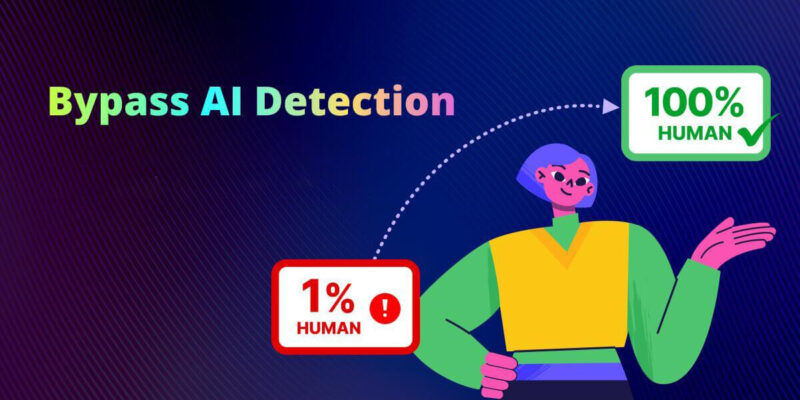
In 2026, the goal isn’t just to generate content; it’s to create undetectable AI content. This guide explores the strategies, tools, and mindsets required to bypass AI detection while maintaining high-quality, impactful writing.
Why Is AI Detection Such a Big Deal?
The rise of tools like GPTZero, Originality.ai, and Turnitin’s AI suite has created a new layer of friction. While AI is a powerful assistant, its output often carries a “synthetic” signature that triggers red flags.
- For Students: A high AI probability score can lead to accusations of academic dishonesty, even if the AI was only used for brainstorming.
- For Researchers: Peer-reviewed journals are increasingly skeptical of AI-heavy manuscripts, fearing a lack of genuine critical analysis.
- For Content Creators: Google’s algorithms have become hyper-sensitive to “mass-produced” content. To rank, your content must demonstrate E-E-A-T (Experience, Expertise, Authoritativeness, and Trustworthiness). Pure AI content often lacks the “Experience” part, leading to poor SEO performance.
To survive this environment, you must learn to bridge the gap between machine efficiency and human soul.
The Science of Detection: Perplexity and Burstiness
Before you can bypass AI detection, you have to understand how the “detectives” work. Most detectors rely on two primary linguistic concepts:
1. Perplexity
This measures how “random” or “predictable” a text is. AI models are trained to predict the most likely next word in a sequence. Therefore, AI-generated text usually has low perplexity. Humans, on the other hand, are unpredictable. We use metaphors, slang, and slightly “incorrect” but creative word choices that keep perplexity high.
2. Burstiness
Burstiness refers to the variation in sentence length and structure. AI tends to produce sentences of a very similar length and rhythm—it’s very “steady.” Human writing is “bursty.” We might follow a long, complex philosophical sentence with a short, punchy one. Like this.
| Feature | AI-Generated Pattern | Human Writing Pattern |
|---|---|---|
| Word Choice | Common, statistically likely | Unique, idiomatic, varied |
| Sentence Length | Uniform and consistent | Variable and rhythmic |
| Tone | Neutral and detached | Emotional, biased, or specific |
How to Create Undetectable AI: A Guide for Every Role
1. For Students: From “Generated” to “Synthesized”
The biggest mistake students make is “prompt-and-paste.” To ensure your essay is undetectable AI, you must use the AI as a collaborator, not a ghostwriter.
- The “Double-Pass” Method: Use AI to generate an outline and a rough draft. Then, go through the draft and manually change every “transition” word (e.g., change “Furthermore” to “Adding to that” or “Wait, there’s more”).
- Inject Class Specifics: AI doesn’t know what your professor said in Tuesday’s lecture. By adding specific references to class discussions or specific page numbers from your textbook, you create a “human footprint” that no detector can replicate.
2. For Researchers: Protecting Your Credibility
In the scientific community, your reputation is everything. Using AI to help with the “dry” parts of a paper—like the literature review or abstract—is common, but it must be handled with care.
- Focus on the “So What?”: AI is great at summarizing what happened, but poor at explaining why it matters in a specific context. Manually write the “Discussion” and “Conclusion” sections to ensure your unique insight shines through.
- Heavy Hedging: Academic AI often sounds too “certain.” Real researchers use hedging language (“It appears that,” “The data might suggest”). Adding these nuances helps bypass AI filters that look for overly confident machine-like assertions.
3. For Content Creators: SEO and the Human Touch
As an SEO writer, your job is to satisfy both the reader and the Google bot. Google doesn’t ban AI, but it hates “unhelpful” content.
- Information Gain: This is the secret sauce. If your article says the exact same thing as the top 10 results on Google, it’s probably AI. Add a personal anecdote, a custom interview, or a unique data point. This “new info” is the hallmark of human creativity.
- Optimization via Humanizers: Use tools that specifically target the “Burstiness” of a text. After generating a blog post, run it through a “humanizer” to break up the robotic flow before you do your final manual edit.
Practical Checklist to Bypass AI Detection
If you have a piece of text and you’re worried about its AI score, follow this 4-Step Transformation:
Step 1: Kill the “AI Words”
There are certain words that AI loves to overwork. If you see these, swap them out:
- Instead of “Delve,” use “Look into” or “Explore.”
- Instead of “Invaluable,” use “Super helpful.”
- Instead of “Tapestry,” use “Mix” or “Collection.”
- Instead of “In conclusion,” use “The bottom line is.”
Step 2: Use the “Rule of Three” Lengths
Look at any paragraph. Ensure it has:
- A short sentence (5-10 words).
- A medium sentence (15-25 words).
- A long, complex sentence (30+ words) with at least one comma or semicolon.
Step 3: Add “Sub-Optimal” Formatting
AI loves perfect lists and perfect bolding. Humans are messier. Use italics for emphasis occasionally, or use a dash—like this—to interrupt a thought. These stylistic choices increase the “human” score significantly.
Step 4: The Voice Note Hack
Read a paragraph of your AI text out loud. If you find yourself running out of breath or feeling like no one actually talks that way, rewrite it as if you were explaining it to a friend over coffee. This is the fastest way to achieve undetectable AI.
Recommended Tools for the Modern Writer
While manual editing is the gold standard, these tools can help you reach the finish line faster:
- Humanizer Platforms: Specialized AI rewriters that focus on increasing perplexity and burstiness.
- Grammarly (Advanced): Not just for spelling, but for “Engagement” and “Delivery” scores. If your delivery is “Neutral,” it’s likely to be flagged. Aim for “Forceful” or “Joyful.”
- Hemingway Editor: Use this to spot those long, monotonous AI sentences. It helps you visualize the rhythm of your writing.
Ethical Considerations: Use, Don’t Abuse
Achieving undetectable AI status is a skill, but it comes with responsibility. The goal should always be to augment your capabilities.
- Transparency: If you are a creator, being honest about using AI as a tool can actually build trust with your audience.
- Verification: Never trust AI with facts. Always fact-check every claim, date, and quote. A “Humanized” lie is still a lie.
Conclusion: The Future of Writing is Hybrid
The era of “pure” human writing is merging with the era of “pure” AI writing. We are entering the age of the Hybrid Creator. By mastering the techniques to bypass AI detection, you aren’t just hiding your tracks; you are actually learning how to be a better editor and a more intentional communicator.
The most effective content in 2026 isn’t the content that was written by a machine, nor is it the content that ignored technology entirely. It is the content that used AI to build the foundation and human creativity to build the home.
Make your AI undetectable by making it more human.