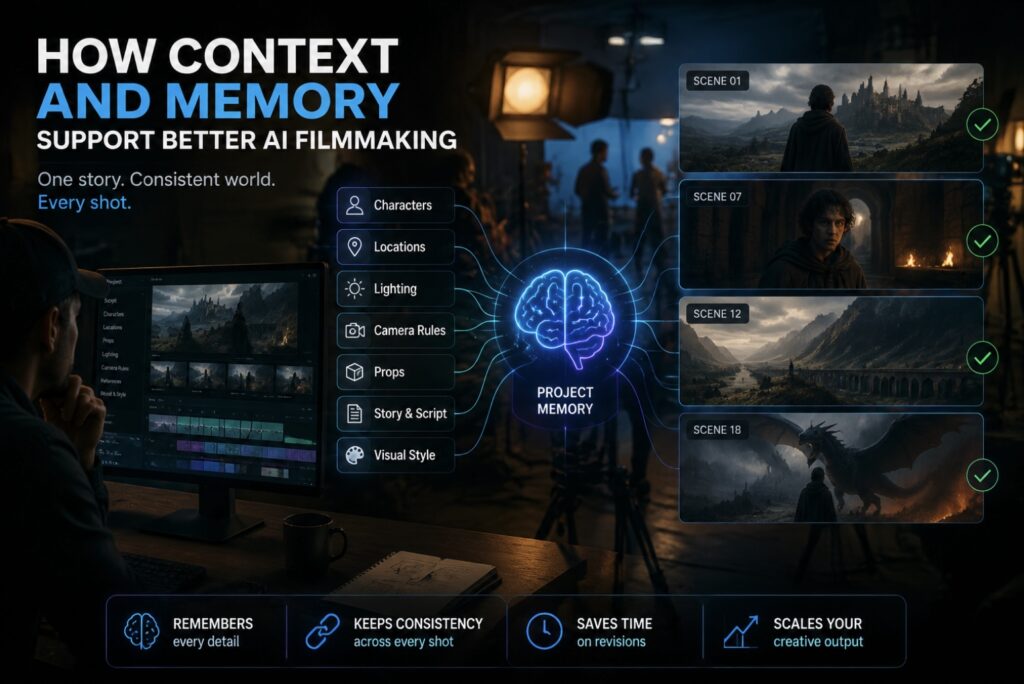
TL;DR: AI filmmaking works best when the system remembers the world behind the film, not only the latest prompt. Context keeps characters, locations, lighting, camera choices, and story rules connected across scenes. Memory helps those decisions carry forward as the project grows. The practical takeaway is simple: build the project context first, then generate and refine shots against that shared creative record.
A strong AI-generated clip can be impressive. A finished film asks for more: the next shot must feel like it belongs to the same story. That is why context and memory are becoming central to AI filmmaking.
Production depends on choices made over time. A character may change clothes. A room may need the same evening light across five shots. A camera rule may shape a full sequence. When those details stay connected, filmmakers can spend more time directing instead of repeating instructions.
This is not only about visual sameness. Memory can also hold why a shot exists, which reference controls the lighting, and what changed after the previous scene. Those details help separate generations become a planned sequence.
Forbes reported on a 33 minute AI made short that still involved writing, editing, concept art, voice direction, grading, sound design, and repeated refinement. The point is simple: generation is one stage. The key task is keeping creative intent connected across the whole project.
Why Does Memory Matter in AI Filmmaking?
Memory matters because films are built from connected decisions. An AI system that remembers characters, locations, visual rules, and earlier choices can carry those details into later shots. That gives filmmakers a more stable base for continuity, revisions, and longer stories.
Consider a dinner scene. If the story returns to the same room later, the system should remember the jacket, window, and warm light.
That is the idea behind the persistent project context in the filmmaking workflow. It keeps creative information available across the project so later generations can refer back to the same world.
What Should Project Context Remember?
Useful project context should hold the facts that must remain true across the film. That includes character identity, costume state, locations, props, lighting rules, visual style, scene goals, and approved references. The aim is to preserve decisions that later shots depend on.
Treat context like a living production bible. It should answer the crew’s main questions before the next setup.
A useful context can include
- Character appearance, wardrobe, and story state
- Location design, time of day, weather, and light
- Camera language, framing, movement, and lens preferences
- Important props and approved visual references
- Scene order, story beats, and locked creative choices
Context should also record why a reference matters. A room image may define light rather than architecture.
This fits the broader idea of how AI agents work in modern technology. Agents are more useful when relevant information can guide later actions instead of being treated as isolated input.
From Prompts to Production Memory
A prompt tells the system what to do now. Context tells it what must remain true while it does it. That difference matters as AI filmmaking moves from single clips to scenes and episodes.
If a director changes a costume or approves a reference, shared memory can carry that choice into later work.
Invideo Agent follows this project-based approach. It’s a crew-like collaborator that keeps scripts, characters, locations, references, and visual rules available while the filmmaker directs the work. Invideo Agent 2 recently launched in late July 2026 as what invideo calls a frontier intelligence agent for serious creative work. Its Context and Briefs structure separates the larger project world from the individual scene or episode, helping earlier creative rules remain available later.
For a longer practical example, this AI agents for filmmaking masterclass shows how agents can fit into a director-led production process.
Memory Across VFX and Post Production
In AI filmmaking, context matters when generated shots must connect with effects work or an edit. The same world rules that guide a scene can guide set extensions, weather, creatures, and lighting changes.
As one application, invideo Agent can generate VFX shots from the filmmaker’s direction. Its AI VFX generator can extend sets, replace skies, create fire, floods, or creatures, and keep the result tied to the established world. From the initial visual reference to the finished composite, shots can progress simultaneously from a single project memory. This can expand what one filmmaker can produce without a separate effects facility or handoff pipeline.
The same invideo Agent setup runs more than 200 image, video, audio, and music models, including Seedance 2.5, GPT Image 2, Gemini Omni Flash Omni, Kling 3, and Nano Banana Pro. It routes each shot to the model suited to that job, so the filmmaker does not need to choose a model for every task.
Why Do Agent Crews Need Context?
A multi-agent AI filmmaking crew works best when its members share the same project facts. A casting agent, camera agent, storyboard agent, and effects agent may have different jobs, but they still need one source of truth for characters, scenes, references, and approved decisions.
Without shared context, one role can make a sensible choice that conflicts with another. A costume change may not reach the storyboard, or a lighting rule may not reach the next effects shot.
A multi-agent filmmaking workflow gives specialist agents access to shared production context while they handle separate tasks. This is closer to a film crew, where departments have different jobs but still work from the same script and creative direction.
How Should You Build Project Context?
Start by locking the creative facts that later shots must inherit. Define the story, characters, locations, camera language, lighting, and visual references. Then generate against those choices, review the sequence, and update the context whenever the story intentionally changes.
A simple seven-step process
- Define the story, tone, and visual goal.
- Create clear character and location references.
- Record camera, lighting, and color rules.
- Break the script into scenes and shots.
- Approve one baseline for each major setup.
- Generate later shots from shared context.
- Review the cut and record intentional changes.
This keeps AI filmmaking centered on direction. The system can handle repeated production tasks, while the filmmaker still decides what belongs in the film.
A similar seven-step AI filmmaking workflow begins by establishing the treatment, characters, world, and shot plan before generation and review.
Conclusion
Context and memory matter because a film is more than a group of good shots. It is a chain of choices that must stay connected. Strong AI filmmaking workflows preserve those choices across development, generation, effects, and editing.
The best starting point is not a longer prompt. It is a clearer project record. Define the characters, world, camera language, and scene rules first. Then let each new shot build on what has already been approved.
Frequently Asked Questions
What does context mean in AI filmmaking?
Context is the shared information that defines a film’s world and creative rules. It can include characters, locations, costume states, visual references, camera choices, story beats, and approved shots. In AI filmmaking, that information gives later generations a stable base, so the filmmaker can build on earlier decisions instead of explaining the same details again.
How is memory different from a prompt?
A prompt gives instructions for the current task. Memory carries important information from earlier work into later tasks. In AI filmmaking, that may mean remembering how a room is lit, what a character is wearing, which reference defines the visual style, or what the director approved several scenes earlier too.
Can memory help character consistency?
Yes, when the workflow keeps approved character references and story states available across scenes. The system can refer back to the same face, wardrobe, proportions, and visual notes while generating later shots. The filmmaker still needs to review results, especially when a character changes appearance or clothing as the story moves forward.
Why use several AI agents for filmmaking?
Different agents can focus on storyboards, cinematography, casting, or effects. Shared context lets those roles work from the same creative facts. This can make a multi-agent workflow easier to direct because each role can begin with the project’s established decisions instead of needing a separate explanation of the entire film.
Does project memory replace filmmaking skills?
No. Memory helps preserve information, but it does not decide what the film should say or feel like. Creative judgment still comes from the filmmaker. Human direction remains essential. Recent industry discussion also frames AI as a production aid that works alongside writing, editing, design, and human decision-making rather than replacing craft.