Introduction
Modern smartphones have become increasingly compact and sophisticated, making motherboard-level repairs more challenging than ever. Unlike basic repairs such as replacing a screen or battery, logic board repair requires precision, experience, and specialized equipment. Whether dealing with charging issues, boot loops, Face ID failures, or damaged ICs, technicians rely on professional micro-soldering tools to perform accurate repairs without replacing the entire motherboard.
Using the right equipment not only improves repair quality but also reduces repair time and minimizes the risk of damaging delicate electronic components. This guide explores the essential tools every professional iPhone repair technician should have for successful logic board repairs.
Why Professional Micro-Soldering Tools Are Essential
Modern iPhone logic boards contain hundreds of microscopic components packed into a very limited space. Repairing these components requires precise temperature control, clear visibility, and accurate diagnostics. Professional repair equipment allows technicians to perform delicate repairs safely while improving consistency and efficiency.
Investing in high-quality tools also helps repair businesses deliver better customer service, reduce repeat repairs, and expand the range of motherboard services they can offer.
Precision Soldering for Accurate Motherboard Repairs
Every successful micro-soldering repair begins with a reliable soldering station. Stable temperature control and consistent heat output are essential when replacing tiny components on densely populated logic boards.
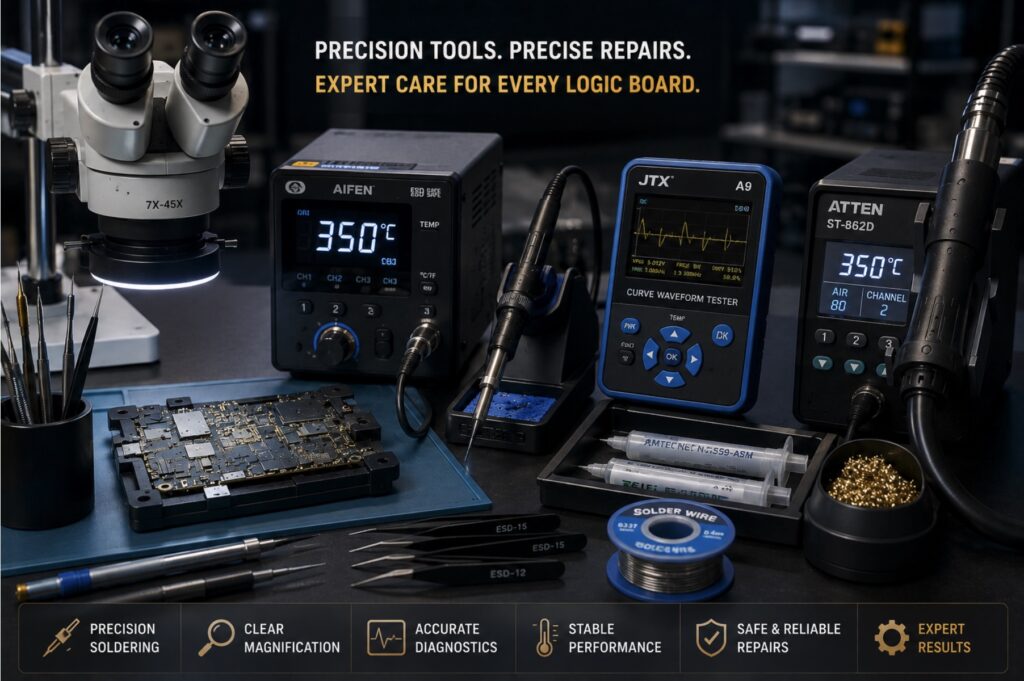
The AIFEN A9HD Precision Soldering Station is designed specifically for advanced electronics repair. It provides precise temperature regulation, fast heating, and excellent thermal stability, allowing technicians to work confidently on delicate iPhone motherboard components while minimizing the risk of overheating nearby circuits.
Clear Visibility Improves Repair Accuracy
Micro-soldering involves working with components that are often impossible to inspect with the naked eye. Proper magnification enables technicians to identify damaged pads, cracked solder joints, lifted traces, and other microscopic defects that could otherwise be missed.
A professional Micro-Soldering Microscope gives repair technicians a clear, enlarged view of the motherboard, making component placement, solder inspection, and precision repairs much easier. Better visibility also reduces eye strain during long repair sessions and improves overall repair quality.
Accurate Diagnostics Before Component Replacement
Successful motherboard repair depends on proper diagnosis before replacing any component. Guesswork can lead to unnecessary repairs, wasted parts, and additional damage.
The JTX A9 Curve Waveform Tester helps technicians analyze electrical signals and evaluate component performance more accurately. By identifying faults before soldering begins, technicians can isolate motherboard problems more efficiently and improve repair success rates.
Additional Tools That Support Micro-Soldering
Although the soldering station, microscope, and diagnostic tester form the core of every repair workstation, several supporting tools also contribute to successful repairs. Hot-air rework stations, precision tweezers, solder wick, high-quality flux, PCB holders, digital multimeters, and ESD-safe workstations all help technicians perform cleaner and safer motherboard repairs.
Combining these tools creates a professional repair environment capable of handling even the most challenging iPhone logic board repairs.
Best Practices for Successful Logic Board Repair
Using professional equipment is only part of the repair process. Technicians should maintain proper soldering temperatures, use quality soldering materials, inspect every repair carefully under magnification, clean flux residue thoroughly, and test the motherboard before reassembling the device.
Following these best practices improves repair reliability while reducing the likelihood of repeat failures.
Common Motherboard Repairs That Require Micro-Soldering
Micro-soldering is commonly used to repair charging IC failures, audio IC problems, Face ID connector damage, display connector issues, power management faults, NAND-related repairs, baseband failures, battery connector damage, and water-damaged motherboard components. These repairs require specialized equipment capable of handling extremely small electronic components with precision.
Benefits of Investing in Professional Repair Equipment
Professional repair tools improve productivity, increase repair accuracy, reduce turnaround times, and enhance customer satisfaction. They also allow repair shops to accept more advanced repair jobs while reducing costly mistakes caused by inadequate equipment.
Over time, investing in reliable repair tools can significantly improve both repair quality and business profitability.
Conclusion
As iPhone technology continues to evolve, motherboard repairs require increasingly advanced skills and equipment. Professional micro-soldering tools play a critical role in ensuring accurate repairs, efficient diagnostics, and reliable long-term results.
From precision soldering stations and high-quality microscopes to advanced waveform testers, each tool contributes to a more efficient repair workflow. By equipping their workstations with professional-grade equipment and following proven repair practices, technicians can confidently perform complex iPhone logic board repairs while delivering exceptional service to their customers.
FAQs
What is micro-soldering used for in iPhone repair?
Micro-soldering is used to repair or replace tiny electronic components on the iPhone logic board, helping restore functionality without replacing the entire motherboard.
Why is a microscope important for motherboard repair?
A microscope provides the magnification needed to inspect microscopic components, solder joints, and PCB traces accurately during repairs.
What makes a professional soldering station different from a basic soldering iron?
Professional soldering stations offer precise temperature control, stable heat output, and better performance for delicate electronic repairs.
Why is motherboard diagnosis important before soldering?
Proper diagnosis helps identify the actual fault, preventing unnecessary component replacement and improving repair success.
Can beginners perform logic board micro-soldering repairs?
Micro-soldering requires specialized training, practice, and professional equipment. Beginners should develop their skills before attempting complex motherboard repairs.