Introduction
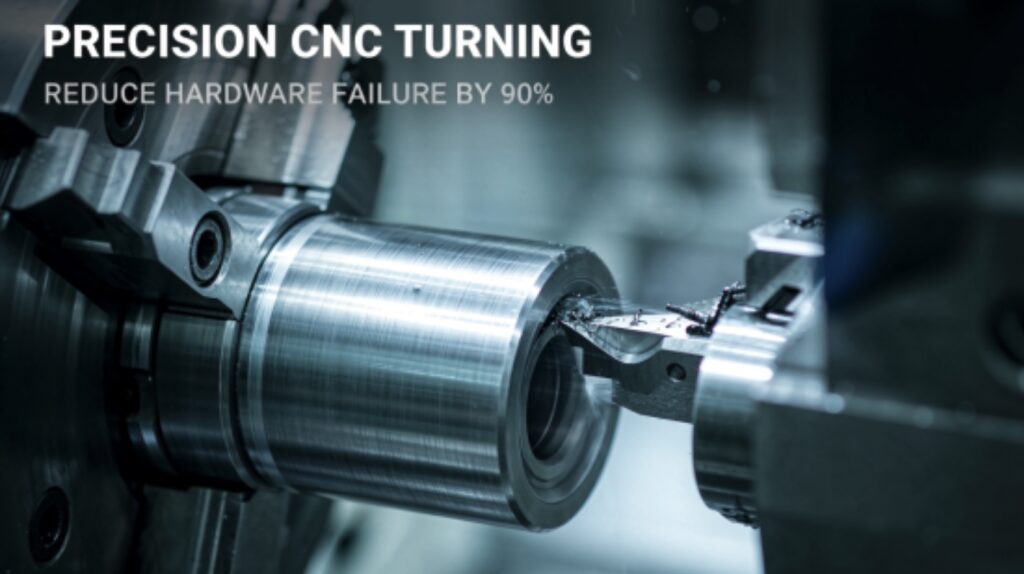
If you are doing low-level hardware repair or reflashing firmware (e.g. Using an FRP bypass tool) the presence of curved, deformed, or twisted mobile phone frames or metal parts can result in motherboard cracks or thermal breakdown. The main fix is to use high precision CNC turning to make perfectly matched replacement parts, together with a strong supplier screening mechanism.
Why Is Precision CNC Turning Critical for Modern Smartphone Hardware Repair?
Modern smartphones have very compact internal spaces in which metal mid-frames, camera ring adapters, and connector posts require exceptionally tight tolerances. Using low quality replacement parts during Android hardware repair can create dimensional deviations that could bring motherboard short circuits or screen pressure damage.
The Challenge of Sub-Millimeter Clearances
Mid-frame of a normal smartphone typically has flatness requirement of 0.05 mm and screw bosses position tolerance of 0.01 mm. When the after-market parts breach these parameters, the assembly stress is directed onto a certain point of PCB solder joint causing it to fail intermittently. Only precision CNC turning can meet the tolerance of a component by producing up to 0.005 mm on the critical features without sacrificing the alignment.
Eliminating Stress-Induced Failures
When a deformed camera bezel from smartphones is replaced with a precisely made one, this will no longer lead to excessive pressure on the photo sensor and prevent both focusing errors and sensor damage. The smartphone enclosure machining tolerances that can be reached using a CNC lathe make up the difference between an effective repair and a repeat issue.
In short the benefits:
- Undisturbed assembling: Perfect fits eliminate PCB bending.
- Constant cooling: Even distribution of heat because of well-machined surfaces.
- Guaranteed performance over time: The possibility of hardware failure is decreased due to the lack of the screws becoming loose.
How Do Custom CNC Turning Parts Improve Device Durability and Thermal Performance?
Irregular-shaped metal buttons, base of heat sinks, and frames of optical elements are products that require specialized fabrication methods. custom CNC turning parts are manufactured from highly efficient processes CNC turning manufacturing for strengthening mechanical properties and improving thermal dissipation.
Optimizing Heat Dissipation Channels
Smartphones’ heat dissipation under intense working load is a big problem in design and manufacturing. Heat spreaders of precise turned aluminum having micro-finishing achieve a surface roughness of Ra 0.4 μm, which gives a maximum contact with the thermal pads. This way of cooling lowers the junction temperature by 8°C with stamped heat spreaders.
Replicating OEM-Level Physical Properties
Engineers and repair should use a professional custom CNC turning service to duplicate the original material hardness and surface finish precisely. Take for instance the case of a titanium alloy SIM tray which has different cutting requirements so corrosion resistance is not hampered. Learn about how custom CNC turning service makes parts which match exactly on mechanical performances to the OEM specifications.
Key considerations include:
- Material selection: 6061 aluminum, 304 stainless, or titanium.
- Surface treatment: Anodizing, PVD coating, or bead blasting.
- Thread accuracy: Unified or metric threads with go/no-go gauge verification.
What Common Machining Defects Cause Hardware Level Failures During Assembly?

Burrs, thread profile deviations, and lack of coaxiality are hidden issues in device assembly. At hardware level device recovery, a single thread misalignment can strip the screw and cause the main board processor damage. Also, a slight burr on a connector post can even cut the flexible cables.
Taking a real scenario where one uses an FRP bypass tool to recover the phone, many times the technician blames the software. The real problem can merely be that the CNC turning components like charging port bracket have been slightly bent making it impossible to fit the board properly. Fixing the physical alignment to perfection before software handling will save loads of trouble-shooting efforts.
Common defects and their consequences:
- Burrs on edges: Cut into ribbon cables, causing shorts.
- Thread pitch error: Screw cross-threading, stripping PCB anchors.
- Coaxiality >0.02 mm: Camera module misalignment, leading to autofocus failure.
How to Choose a CNC Turning Supplier: Why Lowest Price Isn’t Always the Best Value?
Trading off price and quality in CNC turning is pretty sharp. Usually the lowest quote is the one that lacks the CMM full inspector, which is the reason that assemblies are rejected for 15% and even more. Mid-to-high-range suppliers buy the automated equipment and quality systems, and that allows their total cost of ownership (TCO) to decrease.
Four Criteria for Technical Capability Assessment
Evaluating a CNC turning manufacturer requires examining:
- Machine accuracy: Positioning repeatability ≤0.003 mm.
- Full inspection capability: CMM with ±0.001 mm resolution.
- Surface finishing options: Anodizing, plating, passivation.
- Quality certifications: ISO 9001, IATF 16949.
Suppliers with IATF 16949 certification implement defect prevention targeting zero PPM. This ensures every CNC turning parts supplier delivers consistent dimensional conformity.
The True Cost of Cheap Parts
Hypothetical scenario: 1,000 smartphone parts at $0.50 from a budget supplier, thats 12% rejection rate = 120 unusable parts. Replacement parts + labor = an extra $180. A regular-priced supplier at $0.65 with 99.5% accuracy = $145 total saving.
Figuring out how to choose CNC turning supplier is about knowing the end cost, not just what a single unit costs. For more details on how to pick the right supplier, visit CNC turning parts supplier evaluation guidelines.
How Can DFM Optimization Balance ±0.005 mm Precision with Manufacturing Costs in a CNC Turning Quote?
DFM, short for Design for Manufacturing, ensures that production is at a level quality and price. Engineers should only apply ±0.005 mm for quality-critical (CTQ) features like bearing seat or press-fit diameter, the rest non-functional surfaces will be ±0.05mm.
Get a CNC turning quote is mainly influenced by:
- Choice of material: e.g. 6061 aluminum is 2.5 times cheaper than Titanium.
- Tool wear: harder materials reduce tool life, So higher running costs per piece.
- Surface processing: e.g. Type II anodizing adds about 15% to machining cost.
By providing a full set of engineering files containing a STEP or IGES file (3D file) and a PDF drawing including GD\&T, back-and-forth explanation of the design can be saved. And, a good DFM (Design for Manufacturing) can help reduce the CNC machining services cost by 20-30% and still be able to meet the expected performance level.
When requesting a quote, specify:
- Critical dimensions with tolerance callouts.
- Surface finish requirements (Ra value).
- Thread standards (UNC, UNF, metric).
Conclusion
Hardware intended for a cell must be stable and composed of quality structural goods. Don’t purchase on lowest price but present a supplier backup and don’t accept bad quality suppliers. Utilize DFM standards and tolerance control, quality system certification, ISO14001 and AS9100D certified companies, for smooth delivery. For precision metal part solutions or manufacturing feasibility assessment, submit your engineering drawings to LS Manufacturing for professional analysis and instant quoting support.
FAQs
Q1: What is the typical tolerance achievable in precision CNC turning for electronic parts?
High precision CNC turning can usually hit tolerances of up to ±0.005 mm. Parts like screw bosses in phone mid frames, camera rings that fit perfectly around lenses, and adapter parts that go together perfectly in tight enclosures require it.
Q2: Why are ISO 9001 and IATF 16949 certifications important when selecting a supplier?
ISO 9001 validates the supplier’s quality management against internationally accepted standards and IATF 16949 guarantees stringent defect management, both of which are essential for dimensional accuracy and consistent high reliability between different batches.
Q3: Why is a mid-to-high price range supplier often more cost-effective in the long run?
Mid-to-high-range suppliers invest their resources in automated equipment and carry out full CMM inspection to make sure parts have ±0.005 mm tolerances, so they are able to avoid scrap and assembly jams and minimize the number of returns.
Q4: How does DFM optimization help reduce the total cost of custom turned parts?
DFM finds the dimensions of a part that determine fit, so it applies only ±0.005 mm precision where needed. Making the chamfers and threads more efficient brings down the machining time and expense keeping the part fully functional though.
Q5: What 3D CAD file formats are required to request a CNC turning quote?
You can send standard 3D data like STEP (.stp) or IGES (.igs). Also, make sure to provide a PDF 2D engineering drawing if parts require particular tolerance levels, thread details, or surface treatment notes.
About the Author
Senior Precision Manufacturing Specialist with over 15 years of experience in CNC machining, rapid prototyping, and electronic hardware enclosure fabrication. Highly skilled in providing engineering support with tight tolerances (to ±0.005 mm or better) to B2B clients located all over the world that operate in consumer electronics, automotive, and industrial equipment industries. Insights draw from practices at LS Manufacturing.