Developers and creators usually approach a video API with different priorities, but they run into the same question very quickly: how hard is it to move from curiosity to a first useful result? A strong demo can make any platform look interesting, yet real evaluation starts later—when a team has to test inputs, understand the request flow, and decide whether the output can actually fit a workflow.
This is where the Kling 3.0 API starts to make sense in real use. For developers, the practical issue is integration friction. For creators, the practical issue is how quickly an idea becomes visible output. For both groups, a useful setup path matters as much as the headline capability.
Kling 3.0 API Setup Makes More Sense When Access and Use Stay Connected
A lot of API articles separate setup from use, but that often creates the wrong picture. Setup is not valuable on its own. It only matters if it helps a team reach a real use case quickly enough to judge whether the API belongs in the workflow.
That is why Kling 3.0 API is easier to understand when access, request flow, and first output are treated as one connected process. Teams do not want to “finish setup.” They want to know whether the setup leads somewhere practical.
Kling 3.0 API Demands More Than a Feature List
A feature list may explain what the platform can do, but it does not explain how easily a developer can test it or how quickly a creator can get a meaningful result. Real evaluation starts when features meet workflow needs.
Kling AI API Works Better With a Clear Path to First Output
The most useful API docs are the ones that help a team move from account access to a successful request without unnecessary friction. That first output sets the tone for everything that follows.
Getting Started With Kling 3.0 API Through Kie.ai
For teams that want a more direct route, Kie.ai gives Kling 3.0 API a clearer starting point. That matters because access is often where momentum is won or lost. A developer who can make the first request quickly is more likely to keep testing. A creator who can reach a visible draft early is more likely to treat the API as something usable rather than theoretical.
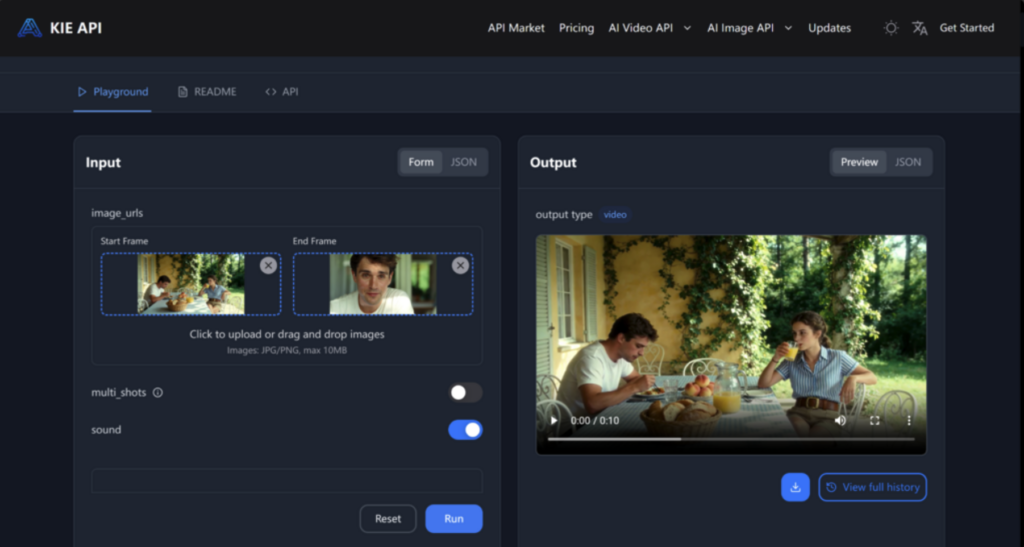
Kie.ai’s documentation fits naturally into that process. Good documentation is not only about completeness. It is about helping developers and workflow teams understand what to send, what to expect back, and how to turn the first successful request into repeatable use.
Kie.ai Offers a Faster Starting Point for Kling 3 API Access
A more direct access layer reduces the time between interest and testing. That is important for small teams, solo builders, and product groups that need to validate fast instead of sitting in setup mode.
Kling 3.0 API Documentation Matters Most at the First Successful Request
Documentation proves its value at the moment a team gets the first real result. That is where confidence begins, and where the API stops feeling abstract.
Practical Kling 3 API Setup Starts With the Right Workflow Goal
Teams get better results when they define the workflow goal before they start integrating. That sounds obvious, but it often gets skipped. One team may want prompt-led video generation for concept drafts. Another may want reference-driven generation built around existing assets. A third may want a reusable layer inside a product pipeline.
Kling 3 API makes more sense when the goal is narrow enough to test properly. Broad exploration has its place, but structured evaluation usually reveals more.
Kling 3.0 API Fits Prompt-Led Video Generation Workflows
When the workflow starts from text prompts, messaging direction, or short scripted concepts, prompt-led generation becomes the clearest entry point. That makes early testing easier because the team can focus on one input pattern first.
Kling Video 3.0 Supports Asset-Led and Reference-Based Workflows
Teams that already have image assets, brand visuals, concept frames, or creative references often get more practical value from reference-based generation. In those cases, the question is not “Can this make a video?” but “Can this extend assets we already use?”
Kling 3 API Becomes More Useful When Teams Define the Output First
A lot of wasted testing happens because teams start with the API before they define the result they actually need. A clearer target changes that. If the goal is a short visual draft, the evaluation should focus there. If the goal is a reusable reference workflow, the testing should reflect that.
Developers benefit from this just as much as creators do. A defined output goal makes request design simpler, testing more focused, and success easier to measure.
Early Kling 3.0 API Testing Works Better With One Clear Goal
The first round of testing should answer one useful question well, not ten questions badly. That makes the API easier to judge and the setup easier to improve.
Repeatable Kling AI 3.0 Usage Matters More Than One Strong Demo
One good output is encouraging. Repeatable output is what proves workflow value. Teams integrating video generation into real systems need consistency more than novelty.
What Developers Should Check Before Integrating Kling 3.0 API
Developers usually need to evaluate more than syntax and authentication. Turnaround time affects how quickly iterations happen. Input flexibility affects how well the API matches existing systems. Request flow affects how realistic integration becomes under normal team conditions.
That is why Kling V3.0 API should be judged as infrastructure, not just as a visual endpoint. Product fit depends on how the interface behaves across repeated use, not only on what it can do once.
Kling 3 API Turnaround Time Affects Real Testing Speed
Fast testing loops make adoption easier. Slow loops reduce experimentation and delay useful feedback.
Kling V3.0 API Input Flexibility Shapes Product Fit
The broader the input flexibility, the easier it becomes to match the API to real product workflows and asset pipelines.
What Creators Should Check Before Relying on Kling AI API
Creators care about output, but they also care about friction. A tool that produces interesting results yet slows the workflow too much becomes hard to rely on. Simplicity matters because creative momentum is easy to lose.
That is why creators should look beyond the first output and ask whether the setup is easy to repeat, whether prompts become easier with use, and whether the API supports the kind of asset flow they already work with.
Better Prompting Still Shapes Kling 3.0 Output Quality
Prompt quality still matters. Clearer direction usually leads to more usable results, especially when the goal is specific rather than open-ended.
Workflow Simplicity Matters as Much as Kling Video 3.0 Output
A strong result is useful. A strong result reached through a clean workflow is much more useful over time.
Kling 3.0 API Delivers More Value When Setup Leads Quickly to Real Use
The most useful way to judge Kling 3 API is not by asking whether it looks impressive in isolation. A better question is whether the setup path leads quickly to a meaningful request, whether the documentation supports real testing, and whether the workflow feels repeatable for the team using it.
That is what developers and creators ultimately need to know before integration. Not just what Kling 3.0 API can produce, but how quickly it becomes practical.