Key Takeaways
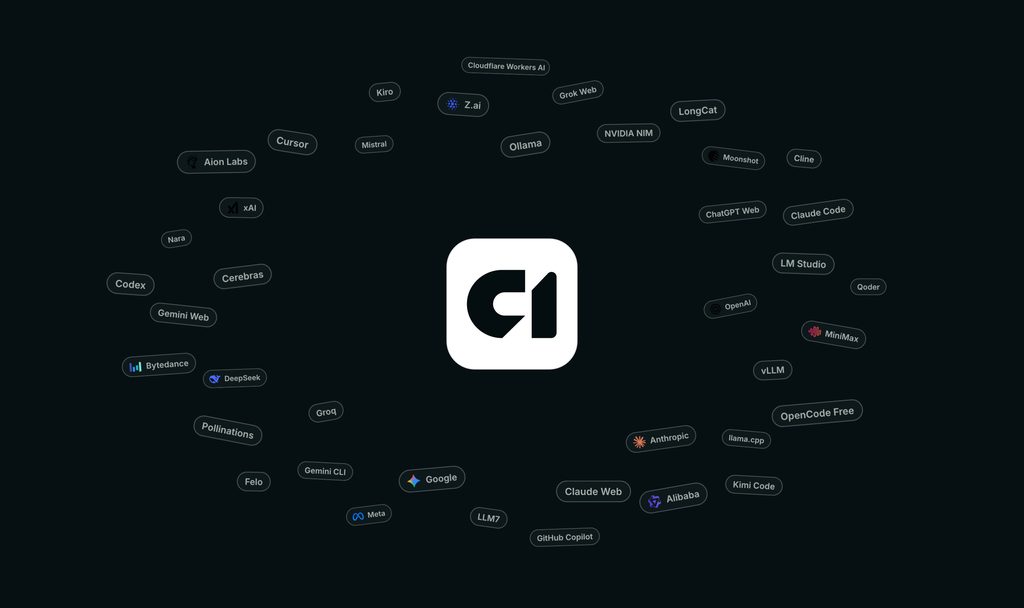
OmniRoute is an open-source, local-first artificial intelligence gateway that consolidates 358 model providers behind a single OpenAI-compatible HTTP interface on port 20128. Its architecture combines automated four-tier fallback routing across subscription, API, cheap, and free tiers with specialized prompt compression engines including RTK and Caveman. System administrators and developers gain unified credential management and Model Context Protocol tooling while isolating process-spawning endpoints behind strict local route guards. However, local routing introduces memory overhead and fallback latency during upstream provider outages.
Why multi-provider routing requires local proxy infrastructure
Local artificial intelligence proxy servers eliminate credential fragmentation, inconsistent client software development kits, and provider rate-limit disruptions by presenting a unified interface to development environments. Software engineering teams frequently balance multiple frontier models, local self-hosted endpoints, and specialized inference providers. Managing individual API keys, disparate client libraries, and distinct error responses within every coding agent or IDE creates severe maintenance overhead. When a provider enforces sudden rate limits or experiences network degradation, client sessions stall unless resilient rerouting occurs immediately.
Centralized Software-as-a-Service proxies introduce data residency risks by transmitting sensitive source code and proprietary prompts through third-party infrastructure. By running directly on the developer workstation or internal private network, a local proxy maintains custody over authorization tokens and outbound traffic.
| Architectural pattern | Network locality | Credential custody | Fallback control | Token payload compression |
|---|---|---|---|---|
| Direct client SDKs | Decentralized client | Distributed per application | Manual client-side try-catch | Uncompressed raw prompts |
| SaaS gateway proxies | Remote third-party cloud | Hosted on external servers | Configured via cloud control plane | Optional cloud middleware |
| Local proxy (OmniRoute) | Local loopback interface | Local SQLite with AES-256-GCM | Automatic four-tier cascade | Inline RTK and Caveman engines |
According to ports.ts L1-L28, OmniRoute deploys as a standalone Node.js service listening on default port 20128, exposing /v1/chat/completions, /v1/models, and Anthropic /v1/messages compatible endpoints. Client tools configure one base URL while OmniRoute resolves targets, validates token quotas, and normalizes streaming responses. The codebase is distributed under the permissive LICENSE L1-L21.
Fallback cascade mechanics across subscription, API, and free tiers
OmniRoute organizes connected artificial intelligence services into a four-tier fallback sequence that prioritizes zero-marginal-cost subscriptions before consuming metered API credits or falling back to public tiers. As structured in tierTypes.ts L1-L25, candidate targets classify across distinct provider tiers including free, cheap, and premium categories. The primary challenge in multi-provider management is avoiding expensive on-demand billing when prepaid organization seats or complimentary quotas remain available. When a request targets a virtual model identifier or aggregated combo pool, the routing engine queries target health and current quota states before dispatching the payload.
Under fallbackPolicy.ts L1-L48, the routing engine persists declarative fallback chains within SQLite via domain state tables, resolving alternative candidate targets in sequential priority order whenever primary providers fail.
The routing engine classifies candidate targets into four distinct operational layers:
- Tier 1 (Subscription pools): OAuth-authenticated organization seats, web session bridges, and fixed monthly plans.
- Tier 2 (Direct paid APIs): Standard commercial API keys for frontier commercial models and regional inference gateways.
- Tier 3 (Cost-optimized providers): Discounted inference hosts, spot capacity providers, and high-throughput budget endpoints.
- Tier 4 (Free tier pools): Zero-cost tiers, keyless community endpoints, and rate-limited developer sandboxes.
# Dispatching a chat completion request to the auto combo pool via curl
curl -s http://localhost:20128/v1/chat/completions \
  -H "Content-Type: application/json" \
  -d '{
    "model": "auto",
    "messages": [
      {"role": "system", "content": "You are a code review assistant."},
      {"role": "user", "content": "Analyze memory allocation in this routine."}
    ],
    "temperature": 0.2
  }'
When an upstream endpoint returns HTTP 429 Too Many Requests, connection timeouts, or service unavailability errors, OmniRoute trips an internal circuit breaker defined in errorConfig.ts L25-L55. The domain fallback policy loads alternative provider candidates registered in SQLite for that model group. Depending on the configured combo strategy—priority, round-robin, random, or least-used—the router dispatches the payload to the next healthy candidate in the cascade without breaking client streaming pipes.
Token compression engines: Caveman, RTK, and OmniGlyph
OmniRoute incorporates dedicated in-line compression engines that preprocess repetitive terminal output, compiler diagnostics, and natural language prompts to reduce token consumption by 15% to 95% on eligible workloads. Modern autonomous coding agents generate expansive message histories dominated by noisy build logs, test runner dumps, and Git diff outputs. Transmitting raw terminal transcripts on every agent turn rapidly exhausts context windows and inflates operational inference costs.
The compression architecture registers modular transformation engines inside registry.ts L1-L40, exposing standard compress(input, config) interfaces. As cataloged in COMPRESSION_ENGINES.md L9-L50, the pipeline supports several primary modes:
rtk(Repetitive Token Trimmer / Knowledge): Analyzes structured command-line interface logs, compiler outputs, and stack traces. It strips terminal escape codes, collapses duplicated progress bars, truncates redundant file listings, and extracts error roots while preserving semantic code symbols.caveman: Applies aggressive natural language condensation to conversational context and historical assistant replies, pruning conversational pleasantries while preserving technical imperatives.omniglyph: Translates selected historical context blocks into dense image tokens for providers supporting native multimodal vision context, bypassing lexical token limits on supported models.stacked: Executes sequential transformations, typically passing raw execution logs throughrtkbefore executing conversational condensation viacaveman.
// Illustrative configuration demonstrating stacked compression pipeline activation
const compressionConfig = {
  mode: "stacked",
  engines: ["rtk", "caveman"],
  rtk: {
    stripAnsi: true,
    collapseRepetitiveLogs: true,
    maxStackFrameDepth: 12
  },
  caveman: {
    condenseHistory: true,
    preserveSystemPrompt: true
  }
};
export default compressionConfig;
Compression engines execute entirely within the local Node.js process prior to network serialization, ensuring transformed prompts require zero external pre-processing calls.
Security boundaries: loopback gating and AES-256-GCM encryption
OmniRoute implements a three-tier route authorization guard and cryptographic field-level encryption to prevent unauthorized process execution and credential leakage. Because local developer tools frequently integrate command-line process spawning and system diagnostics, exposing administrative HTTP routes across external local area networks introduces remote code execution vulnerabilities.
Under routeGuard.ts L1-L35, the security architecture enforces three defense tiers:
- Tier 1 (LOCAL_ONLY): Strictly restricted to loopback addresses (
127.0.0.1,localhost,::1). Endpoints that execute system commands, probe CLI binaries, or manage child processes (such as/api/mcp/and/api/cli-tools/) reject non-loopback requests unconditionally with HTTP 403 Forbidden. - Tier 2 (ALWAYS_PROTECTED): Destructive state modifications, database resets, and credential updates require cryptographic session authentication regardless of developer login settings.
- Tier 3 (MANAGEMENT): Standard administrative dashboard routes protected by password authentication when enabled.
As implemented in encryption.ts L30-L55, sensitive provider credentials and session tokens stored in the underlying SQLite database undergo authenticated symmetric encryption. OmniRoute applies AES-256-GCM using static salt derivation (omniroute-field-encryption-v1) via scryptSync, pinning a full 16-byte authentication tag (AUTH_TAG_LENGTH = 16). This design defends against authentication tag truncation forgery vectors while isolating keys at rest.
Model Context Protocol integration and agent interoperability
According to MCP-SERVER.md L9-L43, OmniRoute embeds a full Model Context Protocol server exposing 110 unique tools across stdio, Server-Sent Events, and streamable HTTP transports. Artificial intelligence development environments such as Claude Code, Cursor, and Cline require standard protocols to inspect server status, monitor provider quotas, manage memory caches, and switch model strategies dynamically.
Developers activate the MCP server through standard configuration profiles:
{
  "mcpServers": {
    "omniroute": {
      "command": "omniroute",
      "args": ["--mcp"],
      "env": {
        "PORT": "20128"
      }
    }
  }
}
The server dynamically categorizes tools across functional domains:
- Routing control: Inspecting active provider cascades, switching combo models, and reviewing fallback circuit breaker states.
- Token telemetry: Monitoring remaining token quotas across free-tier pools and tracking compression ratio metrics.
- Agent memory: Querying persistent context memory stored across SQLite vector tables.
- Cache management: Purging semantic response caches and resetting active connection pools.
By providing native MCP interfaces, coding assistants manage their own routing preferences programmatically during long-running tasks.
Practical installation and verification workflow
As specified in package.json L66-L70, development and execution require Node.js 22 or newer on the host machine. Developers can install and launch the gateway service directly from the npm registry or by cloning the source repository.
# Global installation via npm package manager
npm install -g omniroute

# Starting the gateway service on default loopback port 20128
omniroute --port 20128
Once the service initializes, developers verify that the local HTTP listener is responding properly to probe requests before routing active editor traffic:
# Inspecting service health and active provider status
curl -s http://localhost:20128/api/monitoring/health

# Verifying active listening port on macOS or Linux
lsof -iTCP:20128 -sTCP:LISTEN
If port 20128 is occupied by a previously detached process, developers can terminate the stale owner or designate an alternative listener port using the PORT or OMNIROUTE_PORT environment override before starting the daemon.
Operational constraints, memory overhead, and latency trade-offs
Deploying a local proxy layer introduces operational trade-offs including memory allocation overhead, fallback latency, and potential upstream session invalidation. Running OmniRoute continuously alongside IDE instances and language servers requires persistent system memory, typically consuming between 180MB and 450MB of RAM depending on active SQLite cache sizes and connection pools.
When upstream commercial providers experience degraded network connectivity, executing multi-tier fallback cascades inevitably adds round-trip latency. As an operational observation, a request that encounters upstream latency on Tier 1 before successfully resolving on Tier 2 incurs the cumulative delay of the unresolved connection attempt. Furthermore, free-tier pool availability fluctuates dynamically based on upstream provider policy changes, necessitating regular telemetry updates.
Developers must balance local token compression against determinism: aggressive prompt condensation can occasionally remove subtle syntactic context from complex code refactoring instructions. From an operational perspective, testing compression rules on non-critical workflows prior to widespread development adoption prevents unexpected model misunderstandings.
Official primary source references:
- Project repository: OmniRoute on GitHub
- Upstream project portal: OmniRoute Online
- Model Context Protocol specification: Model Context Protocol
- Node.js cryptographic documentation: Node.js Crypto API