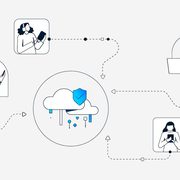
In cyber-attacks, network segmentation involves controlling network resources in different devices, users, and systems through dividing the main network into small partitions, sometimes referred to as networks, segments, or sub-networks. This method avoids some device(s) or user(s) accessing everything, as most business networks would naturally tend to provide access to resources. This allows better control of information, minimizes risks of potential attacks, and helps to manage resources across the whole company.
As devices use various networks, like the Internet of Things, the more segments a company has, the less likely they will suffer some kind of attack on the company. Security attacks are increasingly becoming sophisticated, making it necessary for any organization to protect themselves with the appropriate measures, such as segmentation, in any environment where they have different kinds of assets on different networks, including cloud environments, different networks, etc.
Understanding Network Segmentation
To understand segmentation, you must understand subnetworks. Segmentation is basically splitting up a larger network into different subnetworks. Each subnetwork can have different security settings, and some might even have completely different communication settings altogether. For instance, a company might segment employee workstations, their account department, the database containing customer information, a network specifically for guest use, and some company servers.
Once network administrators decide what network resources to separate, they will segment the network. There are several different ways of segmenting network resources, and network administrators providing managed IT services Toronto businesses rely on might decide on an approach based on the size of the company. These different approaches include logical and physical segmentation. Logical segmentation includes different software configurations of already existing network resources, and physical segmentation entails different hardware devices to completely isolate network resources from the main company network.
Examples of logical segmentation are virtual local area networks (VLANs). Devices are separate with VLANs, but unlike the hardware segmentation of networks, there isn’t a different company network. Microsegmentation takes the level of segmentation and protection to even further limits. Microsegmentation can isolate devices and company network workloads and applications from the main company network, and with this much more control is available to administrators of company networks, as microsegmentation offers more specific security for complex company network infrastructures.
Improved Network Security
The security of network resources can be enhanced. For instance, most of the time company devices are attached to a company network, with more security than any of the home network resources. An unattached home device that becomes compromised with an infected file can infect different company network resources if the home network isn’t segmented.
Using segmentation to divide the network can slow down any security attacks. By placing boundaries around each different resource, segmentation minimizes attacks from spreading through company network resources, as devices aren’t allowed to infect any other resource on the company network.
Segmenting networks can protect confidential data, and companies can enforce network controls on users and systems by segmenting their network and allocating systems to specific network segments. For example, financial records can be allocated to a network segment restricted to financial personnel, and customers’ data to a network segment restricted to certain personnel and software applications.
The internal corporate network can be segmented from guests, so guest systems cannot interact with the internal systems. Companies can restrict internal network use through network controls, which, combined with additional controls, like data encryption, access control and protection, and host-level protection, will build an effective defense-in-depth posture.
Better Network Performance and Management
Improved network performance is another potential benefit. As networks become larger, more traffic and devices consume resources, and congestion can build up. If networks are divided into smaller pieces, devices can be organized to optimize traffic routing and manage network resources. For instance, activities that consume significant network resources can be segmented from activities that require continuous network access. This segmenting will allow network administrators to more easily prioritize critical business systems, and minimize network noise.
Because segments make networks more visible, the job of the network administrator becomes much easier. The administrator will be able to more easily troubleshoot network connectivity problems as segments will narrow the problem scope. Networks will also allow performance and security policies to be established and applied across multiple network segments. Additionally, multiple business operations, multiple network sites, and different company departments can more easily have network and system security and operations segmented.
Reduced Business Risks and Greater Compliance
Network segmentation can minimize the impact on operations and help to lessen the overall financial consequences of a cyber-related attack. This is particularly the case for organizations that hold credit card details, customer information and proprietary corporate data. Furthermore, segmentation can help to fulfill industry requirements to comply with data privacy regulations by enabling restricted access to only specific systems and reducing the count of devices that interact with customer data.
While segmentation can strengthen network security, it is best applied as part of an overall security strategy. Organisations should develop policies around segment reviews, updates and monitoring, particularly with regard to changing access permissions, as poor configurations can present opportunities to the wrong audience and can also disrupt regular, day-to-day operations.
Organisations will also need to engage experienced IT practitioners to identify the systems that can be segmented and help design rules governing the communication between those segments. Regular reviews will help maintain relevance in relation to changing requirements of the business.
Conclusion
Network segmentation offers organisations of any size the ability to strengthen security, increase performance, and increase the control they have over their IT infrastructure. The restriction of communication of systems allows for the slowing down of any malicious activities, protects valuable data and assets, and makes managing the network a much easier process.
Network complexity in the workplace can result in many issues, however, through the appropriate application of network segmentation policies, an organisation is able to establish a much safer and reliable working environment. In short, any organisation that owns its own infrastructure and can justify its protection can apply network segmentation in order to better safeguard its investments and aid the longevity of its operations.